
Small Home Theater Room Design Ideas That Actually Work
Design ideas for a small home theater room, from screen sizing and seating layout to sound choices that fit tight walls without feeling cramped.
Contents10
- Design around your actual seating distance first
- Screen size: smaller than you'd guess from photos
- Seating: fewer, closer seats beats a cramped row
- Sound: a soundbar or compact system, not a full rig
- Light control is easier to get right in a small room
- Wall treatment ideas that make a small room feel bigger and darker
- Furniture that fits the footprint
- Ceiling height and projector throw distance
- Common mistakes in small-room design
- Where to go next
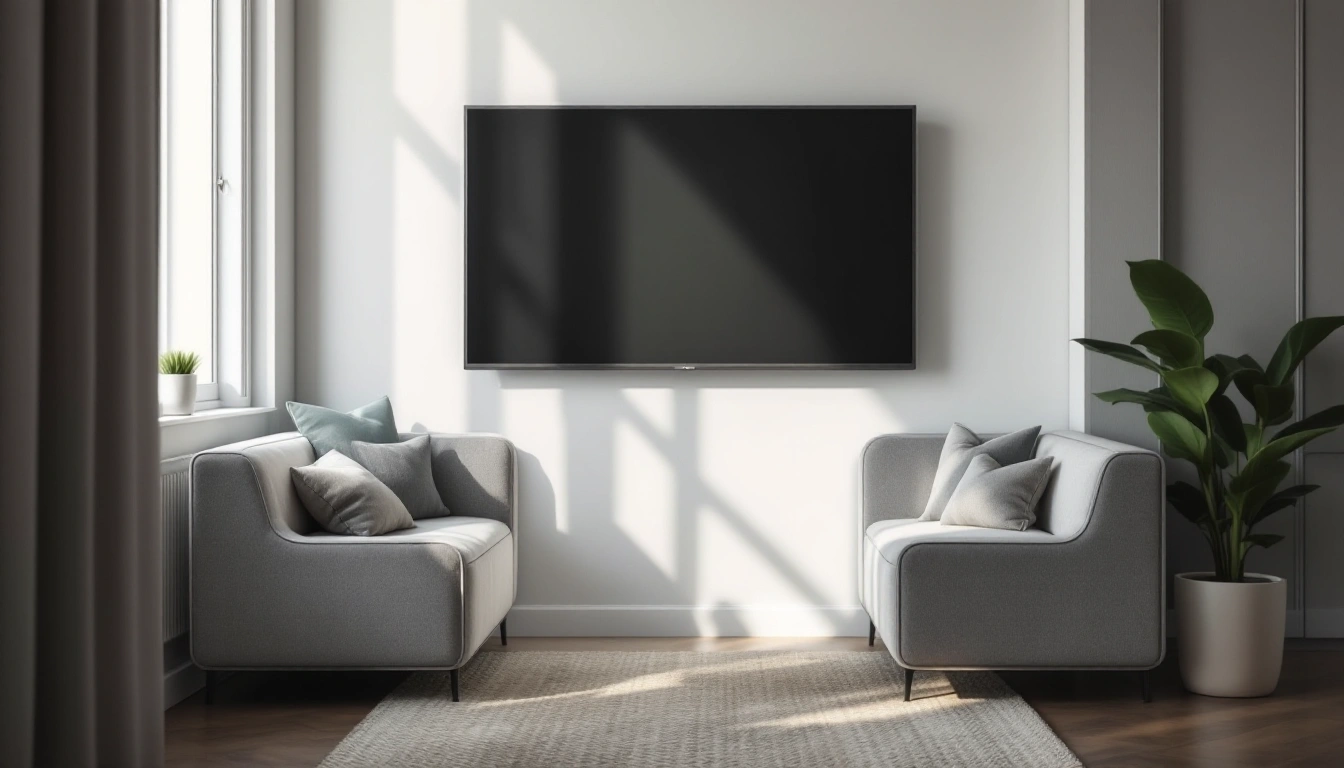
Small home theater room design ideas work best when they lean into the room's size instead of fighting it. Use closer seating, a screen sized to match, and sound choices that account for a small room's tendency to build up bass.
Design around your actual seating distance first
Mark the usable seat positions in the small room. Check doors and recline space. Measure screen-to-eye distance from those seats. It helps compare image angles, but it does not choose personal comfort. Do not copy a larger room's diagonal without that check.
Screen size: smaller than you'd guess from photos
A room photograph does not establish viewing distance. Use the image-size tool for visible dimensions from diagonal. Use the viewing tool separately for angle examples. Then check the proposed image from your seats. Neither tool diagnoses eye movement or prescribes one right size for all viewers.
Seating: fewer, closer seats beats a cramped row
A small room usually can't fit a full theater-style row without seats being too close together or too close to the screen's edges. Two options work better than forcing a wide row in:
- A single row of two to three seats, spaced for elbow room rather than maximum seat count, keeps everyone at a comfortable and roughly equal viewing angle.
- A loveseat or small sectional instead of individual recliners saves floor space and still gives a comfortable, theater-adjacent feel without the bulk of full theater seating.
Check the image from the actual seat. Compare the angle and source detail at normal viewing distance. Geometry does not diagnose eye strain. Keep clear access rather than using every available inch for the row.
Sound: a soundbar or compact system, not a full rig
Small rooms rarely have the wall and corner space a full 5.1 or larger surround system wants, and the room's natural boominess means a big subwoofer can easily overwhelm the space. A soundbar, or a modest 2.1/3.1 system, usually gets you most of the benefit without fighting the room's size. If you do add a subwoofer, expect to run it at a lower level than a similar setup in a bigger room; walk the space with a bass-heavy track playing and adjust down from your first instinct rather than up.
Light control is easier to get right in a small room
Inspect the actual windows and light path. A small room is not automatically easier to darken. Check whether a curtain or shade can block the glare safely. For projection, resolve light on the screen before spending on another brightness feature.
Wall treatment ideas that make a small room feel bigger and darker
A small room benefits a lot from simple, low-cost surface choices:
- A dark, matte paint color on the walls around the screen cuts down reflected light bouncing back onto the picture, which matters more in a tight room where every wall is close to the screen. This alone often does more for perceived contrast than an upgraded screen.
- A patterned or textured accent wall behind the seating (not behind the screen) adds visual interest without competing with the picture, since the screen wall should stay as neutral and non-reflective as possible.
- Floor-to-ceiling curtains, even non-blackout ones, make a small room feel taller and can double as a quick way to dim a window without a full blackout shade installation.
Furniture that fits the footprint
Measure furniture and access before choosing style. Check these dimensions:
- Measure the doorway and any stairwells, not just the room, before buying a couch or loveseat; a piece that fits the room on paper can still be impossible to get through the door.
- Slim-profile or armless seating recovers real floor width in a narrow room compared to bulky recliners, often enough to add a few extra inches between the front row and the screen.
- Wall-mounted shelving instead of a floor cabinet for a receiver, streaming box, and cables keeps floor space open, which matters more in a small room where every square foot of clearance is noticeable.
Ceiling height and projector throw distance
Check the projector's throw chart for the exact image width. Measure from the lens to the image plane. Short throw, ultra-short throw and standard throw are different installation paths. Do not infer fit from the room's total depth. Include cabinet clearance and cables, plus safe fixing too.
Common mistakes in small-room design
- Oversizing the screen to match photos of bigger rooms. Size to your own measured seating distance, not to what looked impressive somewhere else.
- Cramming in a full theater-seating row. A smaller, better-spaced layout beats a technically-fits-but-tight row of recliners.
- Running a subwoofer at "normal" levels. Small rooms reinforce bass naturally; start lower than instinct suggests.
Where to go next
Use the setup guide for the room-first order. Check basement fit when relevant. Compare room ideas after measuring. Keep the design plan tied to those limits.
Compare audio packages after checking the small-room layout. Do not choose a box count before positions.
Questions people also ask
How small is too small for a home theater?
There's no firm cutoff, but once a room is too narrow to seat two people side by side at a comfortable viewing distance, you're better off treating it as a one- or two-person space and designing around that instead of trying to force a bigger layout in.
Should I use a projector or a TV in a small room?
A TV is usually the simpler choice in a small room, since projectors need enough throw distance to reach their intended screen size and enough light control to look good, both of which are harder to get right in a tight space. A short-throw projector is worth considering if you specifically want a very large image and have the light control to support it.
Do I still need a subwoofer in a small room?
Often less than you'd think. Small rooms build up bass more easily than large ones, so a subwoofer that would sound thin in a big living room can sound plenty full; sometimes too full; in a small dedicated theater. Start it at a lower level than you'd expect and adjust up only if needed.