
How to Soundproof a Room: What Actually Works
How to soundproof a room for a home theater; the difference between blocking sound and absorbing it, and what to fix first.
Contents9
- Soundproofing and acoustic treatment are not the same thing
- Start with the door; it's almost always the weakest point
- Walls: mass and decoupling, not foam
- Floors and ceilings carry sound too
- What to fix first, in order
- Windows: often skipped, sometimes worth treating
- Sound masking: reducing the impact, not the source
- Weighing effort against the actual problem
- Common mistakes
Learning how to soundproof a room starts with the sound path. Reducing transmission differs from treating reflections inside the room. Check doors, walls and floors, plus other paths. The right building work depends on those findings. Foam panels are not a universal sound-isolation solution.
Soundproofing and acoustic treatment are not the same thing
Treatment changes reflections within the room. Isolation reduces transmission to another space. A room can have useful treatment and still leak sound. Identify which problem you have. Do not use an absorption rating as proof that a wall blocks more noise.
Start with the door; it's almost always the weakest point
Check the door and its gaps as possible sound paths. Do not assume the wall is the only route. Review these points before choosing work:
- Gaps around the frame and threshold. Weatherstripping and a door sweep close the air gaps sound travels through most easily.
- A hollow-core door. These transmit far more sound than a solid-core door of the same size; swapping to solid-core is one of the single biggest upgrades available for a normal budget.
- A heavy curtain over the door, on a track that extends past the frame on both sides, adds real mass and blocks a meaningful amount more sound for very little cost; a genuinely useful cheap step, not a placebo.
Walls: mass and decoupling, not foam
For sound coming through walls, two approaches actually work:
- Adding mass; extra layers of drywall, especially with a damping compound between layers; makes it harder for sound energy to pass through the wall at all. This is a real construction project, not a weekend fix, and usually only makes sense during a renovation or a room built specifically for this purpose.
- Decoupling; physically separating two sides of a wall assembly so vibration doesn't transfer directly across, using resilient channels or a staggered-stud wall design; reduces transmission without adding as much mass. Also a construction-stage decision, not a retrofit for most rooms.
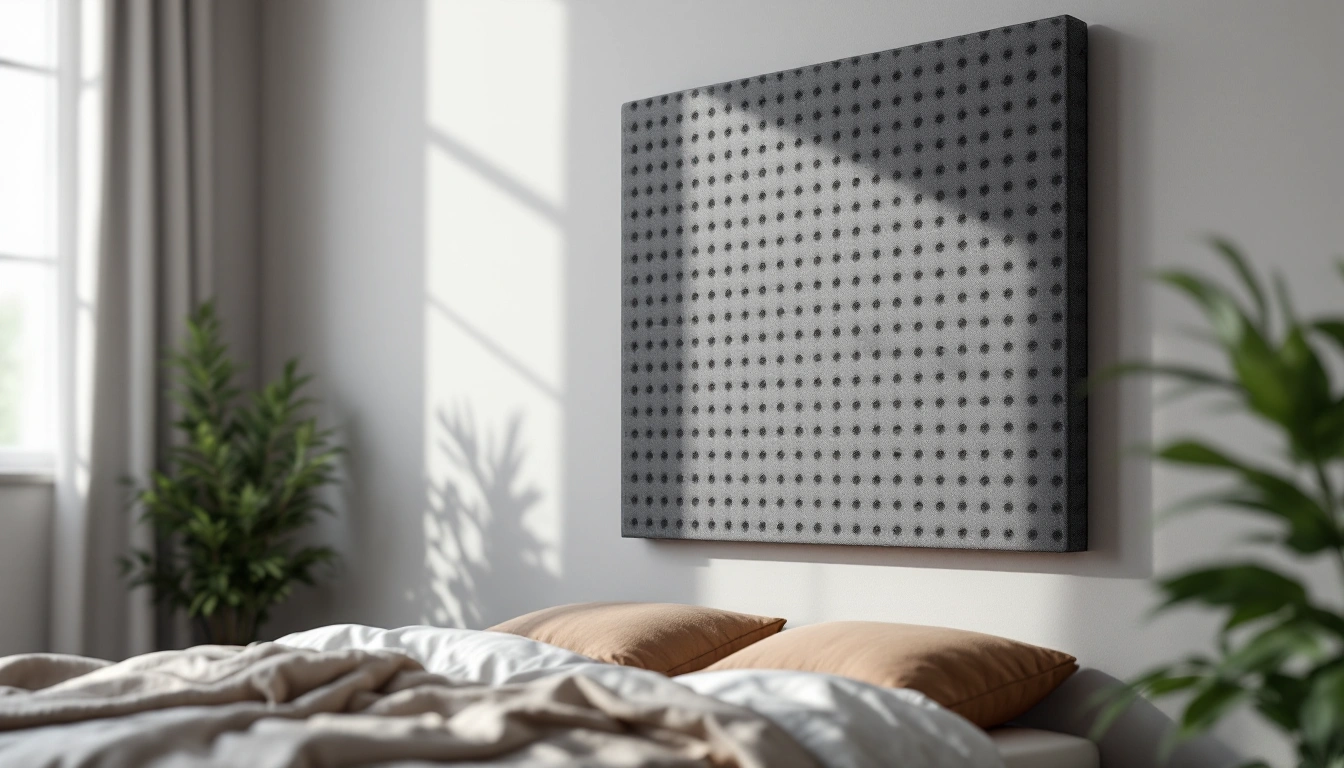
Ordinary wall panels mainly treat sound inside the room. Do not assume their absorption rating proves isolation through a wall. Check the relevant transmission evidence for a proposed assembly. Keep those two kinds of performance separate.
Floors and ceilings carry sound too
Footsteps can create structure-borne noise. Airborne sound and low bass can use other paths too. Do not treat a rug as a verified bass-isolation solution. Find the path causing the complaint before choosing work. Check speaker placement for room use, but do not promise a measured transmission reduction from moving one box.
What to fix first, in order
- Seal the door; weatherstripping, a sweep, and if needed a heavy curtain.
- Add mass to floors with a rug and pad if impact noise (footsteps, bass) is the complaint.
- Only then consider wall construction changes; added drywall layers or decoupling; if the first two steps don't get you far enough, since this step is expensive and disruptive compared to the first two.
Windows: often skipped, sometimes worth treating
Windows leak sound almost as readily as an untreated door, especially older single-pane windows. A few options, roughly in order of cost and disruption:
- Heavy, floor-length curtains on a wide track add mass and absorb some sound at the window itself, for very little cost relative to other options.
- Window insert panels or storm-window-style secondary glazing add a sealed air gap in front of the existing window, which meaningfully cuts transmission without replacing the window itself.
- Full window replacement with laminated or double-pane soundproof-rated glass is the most effective option and also the most expensive, generally only worth it if soundproofing is one of several reasons you're already replacing windows.
Treat a window only when it is part of the sound path. An interior room may have none. Check the door and other paths separately. Do not buy a window treatment for a problem it cannot address.
Sound masking: reducing the impact, not the source
Masking is different from reducing transmission. A fan or other background sound does not prove the wall blocks more noise. If you use masking, keep volume and the other room's needs in mind. Do not claim a measured isolation gain from it. For a transmission problem, investigate the actual path.
Weighing effort against the actual problem
Name the sound path and intended result before choosing wall work. Check these distinctions:
- Occasional late-night viewing near a light sleeper might be solved entirely by lowering volume during those hours and using the door and curtain fixes above; no construction needed.
- A home theater used regularly at high volume next to a shared wall with neighbors or another household member's bedroom is a stronger case for the mass-and-decoupling wall work, since sealing and masking alone likely won't be enough.
- A rental rules out most wall-level construction outright, which makes door and curtain fixes plus rugs; along with sound masking in the affected adjacent room; the realistic toolkit rather than a limitation to work around.
Common mistakes
- Buying foam panels expecting them to stop sound from leaving the room. They improve in-room acoustics, not transmission to other rooms; a common and expensive misunderstanding.
- Ignoring the door while treating the walls. A sealed, solid-core door often matters more than anything done to the wall surfaces around it.
- Soundproofing to a standard the situation doesn't call for. Match the effort to the real conflict; a detached house with daytime-only viewing needs far less than a shared wall used late at night.
Questions people also ask
What's the cheapest way to soundproof a room?
Sealing gaps around the door and adding a door sweep is the cheapest meaningful step, since even a well-built wall leaks most of its sound through the door and any air gaps. A heavy curtain over the door and thick rugs on hard floors add a noticeable amount more for very little cost, though neither comes close to what a sealed, mass-loaded wall achieves.
Do acoustic foam panels soundproof a room?
Not on their own. Foam panels absorb reflections inside the room, which improves clarity and reduces echo, but they don't stop sound from passing through walls to other rooms. Actual soundproofing; blocking sound transmission; needs mass, air gaps, and sealed surfaces, which foam panels don't provide.
How much soundproofing does a home theater really need?
It depends entirely on who else is in the house and when you watch. A theater used only during the day in a detached house needs far less than one used late at night next to a bedroom. Match the effort to the actual conflict you're trying to solve rather than soundproofing to a standard you don't need.