
Speaker Placement: The Full Front-to-Back Layout
Where every speaker in a home theater goes, from front left/right to surrounds, and the room compromises that actually matter.
Contents9
- Front left and right: the foundation
- Center channel: gets dialogue right, or gets it wrong
- Surrounds: side-and-slightly-behind, not directly behind
- Height/Atmos channels: the layer on top
- Room compromises that actually matter
- Distance and angle: the two numbers worth actually measuring
- Height matters as much as horizontal position
- Bookshelf, floor-standing, or in-wall; placement changes by speaker type
- Common placement mistakes
Speaker placement uses the actual seats as reference points. Check the front left and right, plus center first. Add surrounds using the guide for the chosen layout. Check bass separately. A general diagram should not replace the exact speaker and receiver instructions.
Front left and right: the foundation
Use seated ear position as a starting reference for the front pair. Check the matching layout guide and the speakers' aiming instructions. Include distance and obstacles on the plan. Compare the image from the actual seats. Do not claim one spacing rule fits every speaker and room.
Center channel: gets dialogue right, or gets it wrong
Keep the center driver's path clear of furniture and trim. Check its aiming instructions from the main seats. A shelf can block or constrain it even when the grille is visible. Confirm the channel and source track before blaming the speaker for poor dialogue.
Surrounds: side-and-slightly-behind, not directly behind
Choose the surround positions from the guide for the actual channel count. A 5.1 diagram and 7.1 diagram are not interchangeable. Check safe fixing, door swings and the listener's position. Use the supported channel test to confirm assignment before judging a film scene.
Height/Atmos channels: the layer on top
For heights, use the Atmos placement guide. Direct overhead speakers and reflected-height modules need different checks. Match the diagram to the channel count. Verify receiver assignment and safe fixing before adding speakers.
Room compromises that actually matter
Few rooms allow the textbook layout exactly. When you have to compromise:
- Prioritize the front stage over surrounds. A slightly imperfect surround position matters less than a poorly aimed center channel; you'll notice dialogue clarity every single viewing, while surround imperfections are subtler and less constant.
- Keep left/right symmetry even if it means moving furniture. Asymmetric front speakers are more noticeable than most other placement compromises, because they skew the entire stereo image, not just one effect.
- Don't force surrounds into a technically-correct spot that's blocked or awkward. A surround speaker positioned a bit off the ideal angle but with a clear, unobstructed path to the listener usually beats one at the "correct" angle but blocked by furniture or a doorway.
Distance and angle: the two numbers worth actually measuring
Check these measurements after the positions are chosen. They do not replace the exact setup guide:
- Equal distance from each speaker to the main seat. Most AV receivers include a setup routine (often using a supplied microphone) that measures distance and level for each speaker and applies correction automatically; worth running even in an imperfect room, since it compensates for small unavoidable asymmetries rather than requiring the room itself to be perfectly symmetrical.
- Toe-in angle on the front left and right speakers. Aiming them directly at the listening position rather than straight out into the room sharpens the stereo image noticeably. A few degrees too much or too little rarely ruins the effect, but pointing them straight ahead in a wide room measurably softens imaging compared to aiming them in.
Height matters as much as horizontal position
Check height as well as left-to-right position. Use seated ear position and the model's aiming guidance. Review these points:
- Front left/right and center: at or close to ear height for the main seated position; a center channel mounted well above a TV, angled down, sends less direct sound at the listener than one closer to ear height.
- Surrounds: somewhat above ear height, roughly a foot or two, so they clear furniture and heads in the room without aiming down awkwardly.
Bookshelf, floor-standing, or in-wall; placement changes by speaker type
The physical style of speaker you're using shifts some of these placement details:
- Floor-standing speakers give you height for free but take up real floor space at the front of the room; plan for this before choosing a size relative to the room.
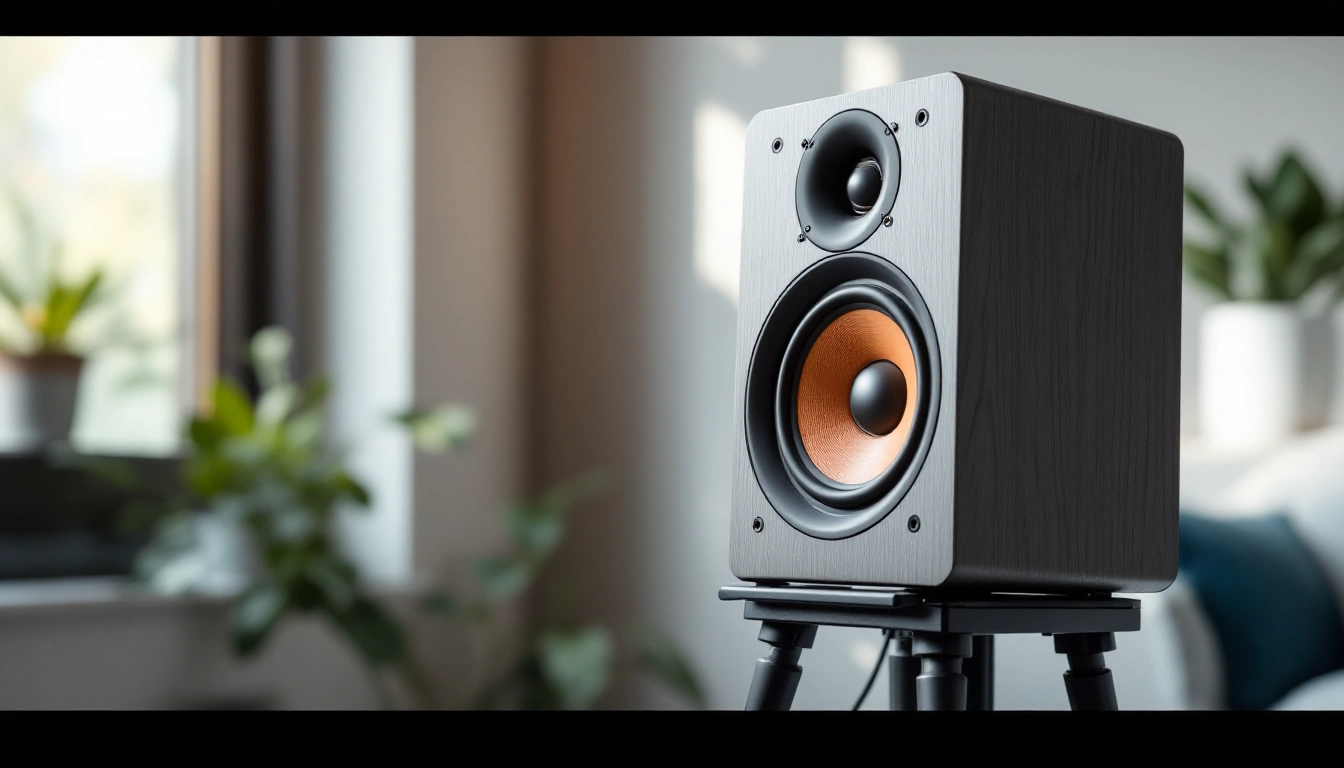
- Bookshelf speakers need a stand or shelf at the right height, since a bookshelf speaker sitting on the floor is well below ear height and loses clarity and imaging as a result.
- In-wall or in-ceiling speakers solve the floor-space problem entirely but need to be planned before drywall goes up (or a contractor willing to cut into finished walls), and the mounting position becomes effectively permanent.
Common placement mistakes
- Angling front speakers straight ahead instead of toward the seat. Even correctly spaced speakers lose focus if they're not aimed at the actual listening position.
- Letting a TV stand or cabinet lip block the center channel. Check the direct sound path from the center speaker to ear height at the seat; a shelf edge in the way audibly dulls dialogue.
- Treating surround placement as fixed and final on day one. Small adjustments after listening to a scene with clear directional effects often improve the result more than careful measuring alone.
Use Atmos placement for the height layer. Check its different speaker methods before adding them.
Questions people also ask
What's the single most important speaker to get right?
The center channel. It carries most movie and TV dialogue, so a poorly placed or poorly aimed center speaker is the placement mistake people notice fastest; usually as dialogue that sounds muffled, off to one side, or hard to follow under music and effects.
Do front speakers need to be the same distance from the seating area?
Ideally yes, and at matching height and angle too. Symmetry between left and right keeps the stereo image centered; a left speaker noticeably closer than the right pulls dialogue and effects toward that side even if the source audio is centered.
Can I place surrounds behind the seat instead of to the side?
You can, but side-and-slightly-behind is the more common recommendation because it keeps ambient and directional effects feeling like they surround the listener rather than just coming from one direction behind them. Directly behind can work in a pinch, but test it against a real movie scene before treating it as final.